




A Beginner’s Guide to Stretching at Home for Better Flexibility
Stretching is a simple yet powerful way to improve your flexibility, reduce muscle tension, and enhance your overall physical health. You don’t need a gym membership or fancy equipment to get started; all you need is a little space and some time. This beginner’s guide will walk you through the basics of stretching at home, explain the benefits, and provide easy stretches ideal for newcomers.
Why Stretch at Home?
Stretching offers many benefits such as:
– Increased flexibility: Helps your muscles move more freely.
– Improved posture: Loosens tight muscles that can cause slouching.
– Reduced muscle tension and soreness: Eases discomfort from daily activities.
– Better blood circulation: Supports healing and muscle recovery.
– Stress relief: Encourages relaxation and mindfulness.
Doing stretches at home gives you control over your schedule and pace. You can stretch anytime, making it easier to maintain a consistent routine.
Stretching Basics
Before you begin, keep these key points in mind:
– Warm-up first: Stretching cold muscles can cause injury. Warm up with light activity like walking in place or gentle arm swings for 3–5 minutes.
– Avoid bouncing: Use slow, steady movements instead of rapid, jerky motions.
– Hold each stretch: Aim for 15–30 seconds, breathing deeply and relaxing into the stretch.
– Listen to your body: Mild tension is normal, but if you feel sharp pain, stop immediately.
– Stretch both sides: Maintain balance by stretching both the left and right sides evenly.
Types of Stretches
There are a few different kinds of stretches you can explore:
Static Stretching
This involves holding a stretch for a set time without movement. It’s the safest choice for beginners and ideal after a warm-up or workout.
Dynamic Stretching
Dynamic stretches are active movements that take your joints through their full range of motion. These are best used before exercise to prepare muscles.
Passive Stretching
Here, you use an external force (like a strap or partner) to deepen the stretch. This requires caution and is better for more flexible individuals.
For beginners, static stretching is recommended while you build awareness and flexibility.
Easy Stretches You Can Try at Home
Here are some beginner-friendly stretches that target common areas of tightness:
1. Neck Stretch
– Sit or stand tall.
– Slowly tilt your head toward your right shoulder.
– Hold for 20 seconds.
– Repeat on the left side.
2. Shoulder Stretch
– Bring your right arm across your chest.
– Use your left hand to gently pull your arm closer to your body.
– Hold for 20 seconds.
– Switch arms.
3. Cat-Cow Stretch (Spine Mobility)
– Get on all fours with hands under shoulders and knees under hips.
– Inhale, arch your back, letting your belly drop toward the floor and lift your head (Cow).
– Exhale, round your spine toward the ceiling and tuck your chin (Cat).
– Repeat 8–10 times.
4. Seated Hamstring Stretch
– Sit on the floor with legs extended straight.
– Keep your back straight and slowly reach toward your toes.
– Hold the stretch for 30 seconds without forcing it.
5. Quadriceps Stretch
– Stand near a wall for balance if needed.
– Grab your right ankle behind you and gently pull it toward your buttocks.
– Hold for 20 seconds.
– Switch legs.
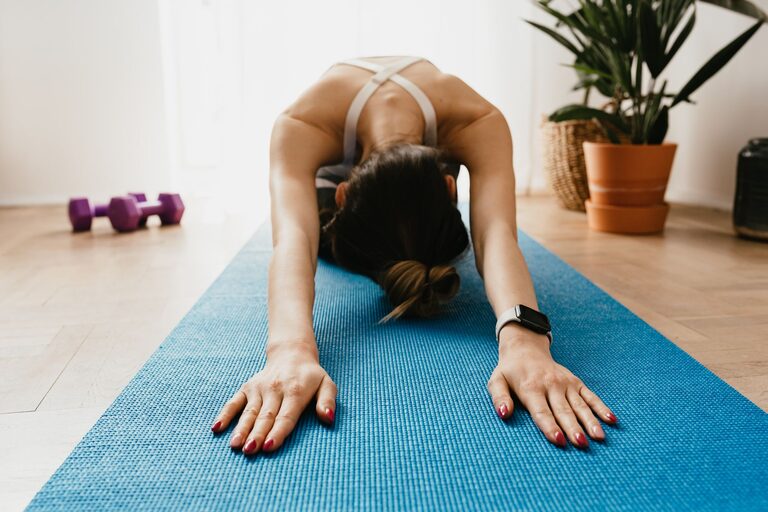
6. Child’s Pose
– Kneel on the floor, sit back on your heels.
– Stretch your arms forward and lower your forehead to the floor.
– Hold for 30 seconds while breathing deeply.
Creating a Stretching Routine
To build a simple daily routine:
- Set aside 10–15 minutes each day.
- Begin with a quick warm-up.
- Perform stretches for major muscle groups like neck, shoulders, back, legs.
- Hold each stretch for 20–30 seconds.
- Finish with deep breathing to relax.
Consistency is key for progress. Aim to stretch at least 3–4 times per week.
Tips for Success
– Wear comfortable clothing that allows movement.
– Use a yoga mat or soft surface for comfort.
– Focus on your breathing during stretches.
– Keep a journal or use an app to track your progress.
– Don’t rush; quality over quantity matters.
When to Avoid Stretching
If you have any injuries or medical conditions, consult a healthcare professional before starting a stretching routine. Avoid stretching inflamed or painful areas until healed.
—
Stretching at home is an accessible way to improve your body’s flexibility and ease daily tensions. With just a few minutes each day, you can create a habit that supports long-term wellness and comfort. Start slow, listen to your body, and enjoy the benefits of flexibility and relaxation that come with regular stretching.